Black Painters, Poets, and Performers: The Living Arts Scene in Pensacola
From Gallery Night on Palafox to the African American Heritage Society on Church Street, Pensacola's Black artists are creating, exhibiting, and building community right now.
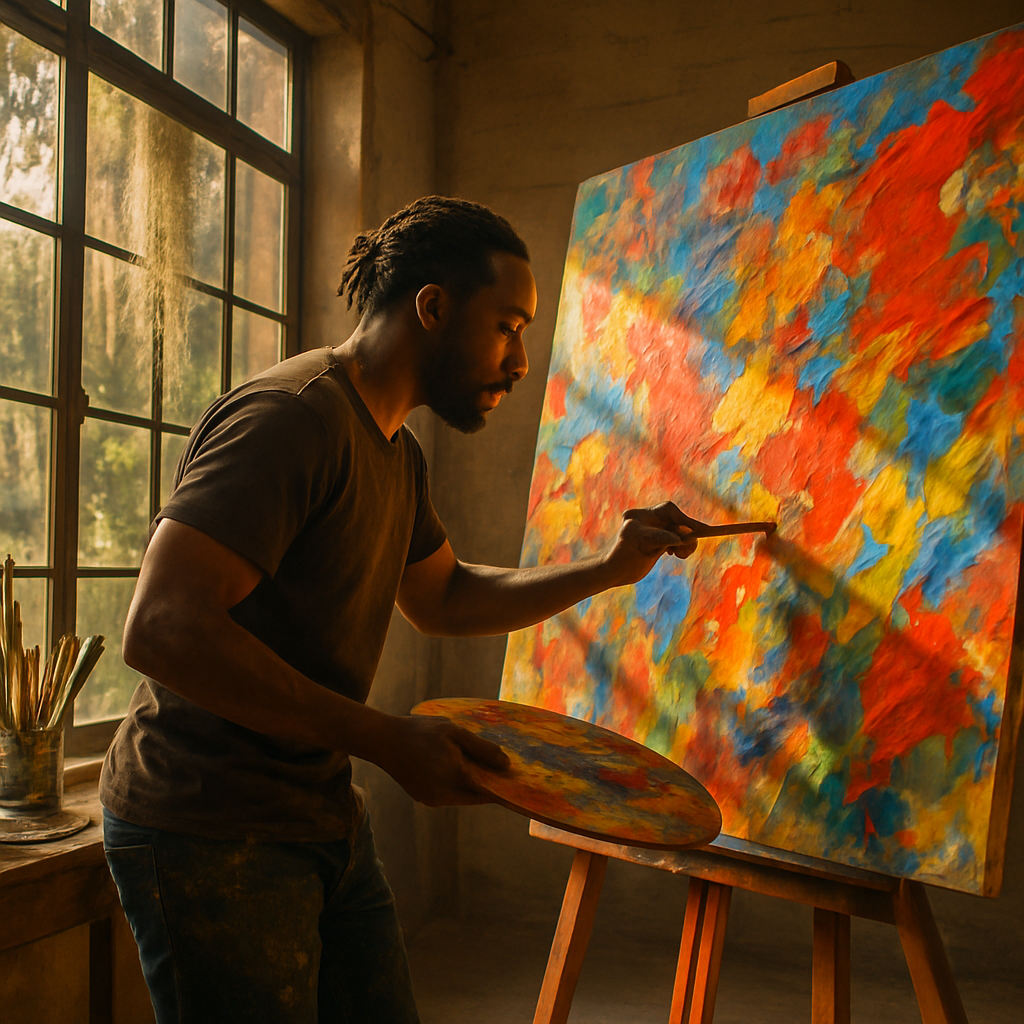
Pensacola's Black artists are building a visible, connected, and growing creative community.
<p>Walk through downtown Pensacola on a third Friday evening and you will see it: Palafox Place transformed into a half-mile street gallery. Painters hang canvases under strings of lights. Poets claim corners. Musicians set up between the food trucks. Gallery Night Pensacola draws tens of thousands of visitors a year, and in recent years, a growing number of the artists lining the street are Black — reclaiming space in a city where Black creative expression has deep but often unacknowledged roots.</p>
<p>This is not a revival. It is a continuation. Pensacola has always had Black artists. What is changing is the visibility.</p>
<h2>Gallery Night and the Street-Level Scene</h2>
Stay connected to Pensacola’s Black community
Be the first to know when new stories drop. Free to subscribe. Unsubscribe anytime.
<p>Gallery Night Pensacola, held on the third Friday of each month, is the city's most accessible entry point into its visual arts scene. The event runs from 5 p.m. to 9 p.m. along Palafox Place and routinely features more than 70 artists and vendors. For Black artists, it has become an increasingly important platform.</p>
<p>The June edition of Gallery Night carries particular weight. Each year, the Juneteenth-themed installment — branded as "Art of Freedom" — centers Black creative work explicitly. In 2025, more than 70 art vendors lined the street for the Juneteenth kickoff event, with live music, food, and African-influenced crafts alongside painting, photography, and mixed-media work. The event draws Pensacola residents who might not otherwise step into a gallery, making it one of the most community-rooted arts experiences in Northwest Florida.</p>
<p>For artists working in painting, photography, and textile arts, Gallery Night is more than a sales venue. It is a regular gathering of peers, an audience-building mechanism, and proof that there is sustained local appetite for Black visual art on the Gulf Coast.</p>
<h2>The African American Heritage Society: Pensacola's Anchor Institution</h2>
<p>If Gallery Night is the street-level scene, the African American Heritage Society of Pensacola is the institutional anchor. Founded in 1990 and located at 200 Church Street in the heart of downtown's historic district, the Society has operated continuously for over three decades as a museum, archive, and event space dedicated to Black Gulf Coast history and culture.</p>
<p>Its exhibitions rotate regularly, drawing on partnerships with major institutions including the Schomburg Center for Research in Black Culture in New York. In January 2026, the Society reopened its season with an Art Talk presented by Donald Partington, signaling a continued commitment to programming that connects visual art with historical and community context.</p>
<p>The Society's annual Celebrating Our Ancestors festival, held each October, represents one of the most sustained intersections of art, music, and community history in Escambia County. The two-day event features visual art alongside literature programs, musical performances, and historical presentations — modeling what it looks like when a community's creative life is integrated with its memory and its institutions rather than separated from them.</p>
<h2>The Poets Are Building Something</h2>
<p>Pensacola's Black poetry scene is active, traveling, and producing artists with national reach. Quincy "Q" Hull, who spent formative years in Pensacola's poetry community and served as vice president of the Still Black Sea Writers' & Artists' Guild, is a case study in what that scene can produce.</p>
<p>Hull — a poet, performer, and interdisciplinary artist — has hosted open mics and featured at events nationwide since relocating to Denver in 2021. He was featured as an artist-in-residence at the 309 Punk Project, a Pensacola arts organization known for cross-genre, cross-cultural collaboration. His trajectory tracks a pattern visible across multiple Pensacola artists: deep roots in a local community that shaped their voice, followed by careers that extend far beyond the Gulf Coast while the community remains a reference point and a home base.</p>
<p>The Still Black Sea Writers' & Artists' Guild, the organization Hull served, represents an important node in Pensacola's Black literary community — a gathering point for writers who work in poetry, fiction, and essay, and who understand creative practice as inseparable from community accountability.</p>
<h2>Music: From Vinyl Music Hall to the Neighborhood</h2>
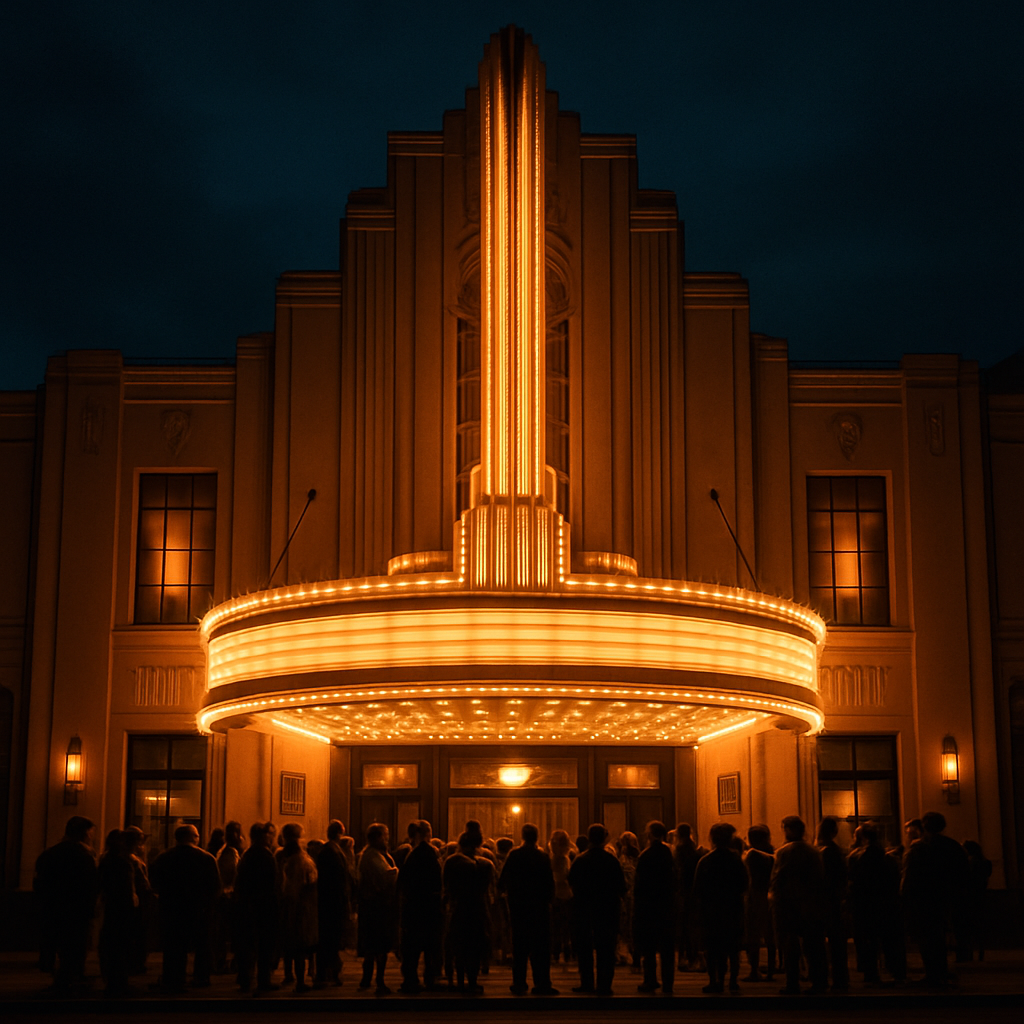
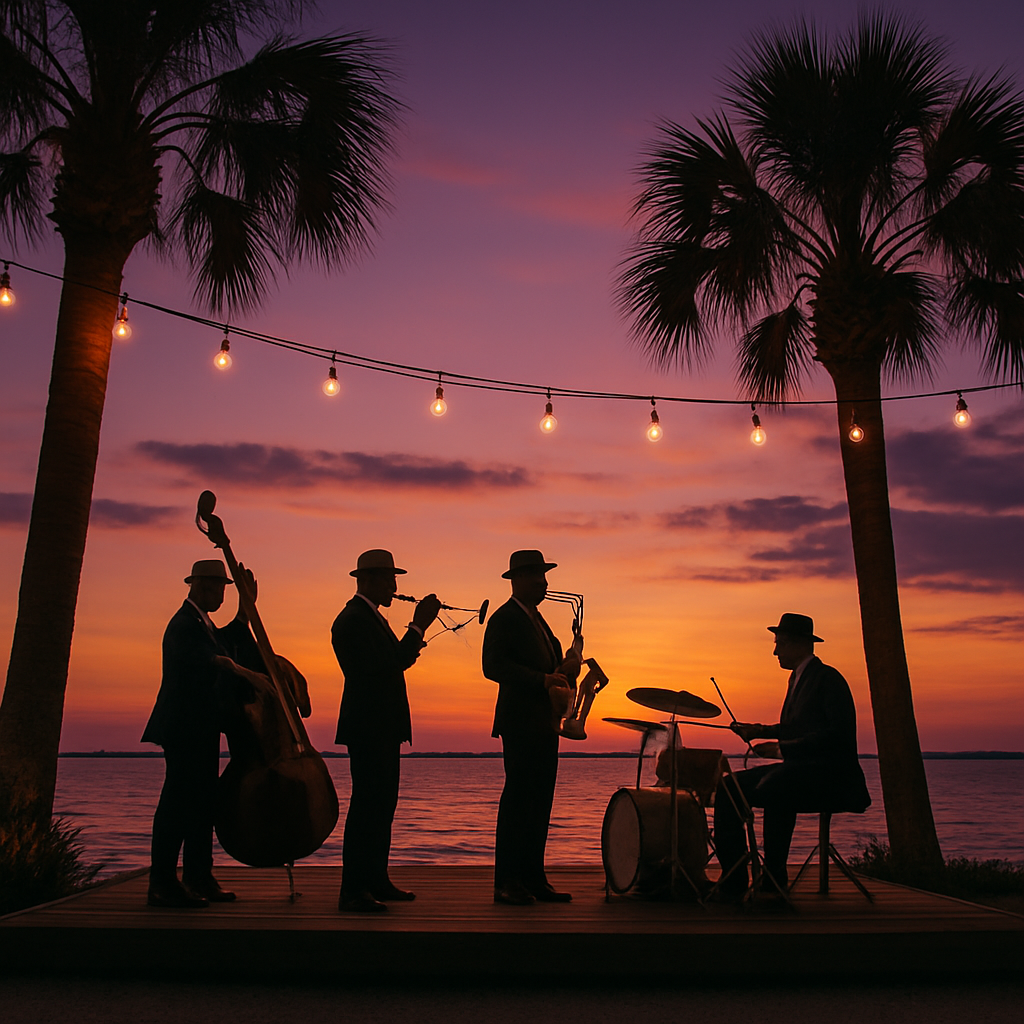
<p>Pensacola's live music scene runs from the intimate to the architectural. Vinyl Music Hall, located at 2 S. Palafox Street in a converted 1912 Masonic lodge, is one of the city's premier mid-sized venues. Its programming reflects a city with genuine musical diversity — and its stages have hosted Black performers across genres from R&B to hip-hop to jazz.</p>
<p>But the music doesn't stay in venues. It moves through neighborhoods, parks, and community spaces. The Saenger Theatre, covered previously in The Beacon, has historically hosted Wynton Marsalis, Ziggy Marley, and the Pensacola Symphony — and its Summer Classic Movie Series and annual performance calendar continue to bring music into the lives of residents who might not seek it out in clubs.</p>
<p>At the neighborhood level, musicians connected to Pensacola's historically Black communities have always found ways to perform and collaborate outside of formal venue structures. This tradition — rooted in the Chitlin' Circuit-era performance culture of Belmont-DeVilliers — persists in house concerts, church performances, community center events, and the informal network of musicians who know each other and call on each other.</p>
<h2>Visual Arts Education and the Next Generation</h2>
<p>The pipeline matters. First City Art Center, the nonprofit arts organization at the western edge of downtown, serves over 10,000 adults and children annually, offering everything from glass-blowing to painting to ceramics. Its youth art programs and scholarship offerings represent direct investment in the next generation of Gulf Coast artists — and its programming has actively worked to serve communities across socioeconomic lines.</p>
<p>Pensacola State College's Anna Lamar Switzer Center for Visual Arts runs a competitive gallery and awards program, and its faculty are working artists. The Pensacola Museum of Art, located at 407 S. Jefferson Street and affiliated with the University of West Florida, offers a Members Show open to local artists alongside its rotating exhibition schedule. The 309 Punk Project runs an artist-in-residence program that has brought both local and visiting artists — including Talamieka Brice, a Mississippi-based award-winning filmmaker and visual storyteller — into contact with the Pensacola community.</p>
<p>For young Black artists growing up in Pensacola today, these institutions represent a genuine ecosystem. Not perfect, not fully representative, but real — a set of spaces and programs where creative work can be developed and shown.</p>
<h2>What the Scene Needs</h2>
<p>The artists are here. The institutions exist. The community shows up when invited. What Pensacola's Black arts scene needs — what every city's Black arts scene needs — is documentation, investment, and sustained attention.</p>
<p>The Pensacola Beacon intends to provide the first. We will continue to cover Black visual artists, musicians, poets, and performers on the Gulf Coast: not as curiosities or exceptions, but as the living continuation of a creative tradition that has shaped this city for more than a century.</p>
<p>If you are an artist, musician, poet, or performer working in Pensacola's Black community and you want your work covered, reach out through our <a href="/submit">story submission page</a>. The best coverage starts with the artists telling their own stories.</p>
Get stories like this in your inbox every week
The Pensacola Beacon covers Black culture, history, and community on the Gulf Coast.