Belmont-DeVilliers: Where Black Business Thrived
Before there was a formal name, there was a district — a 30-block stretch where Black Pensacola built economic independence.
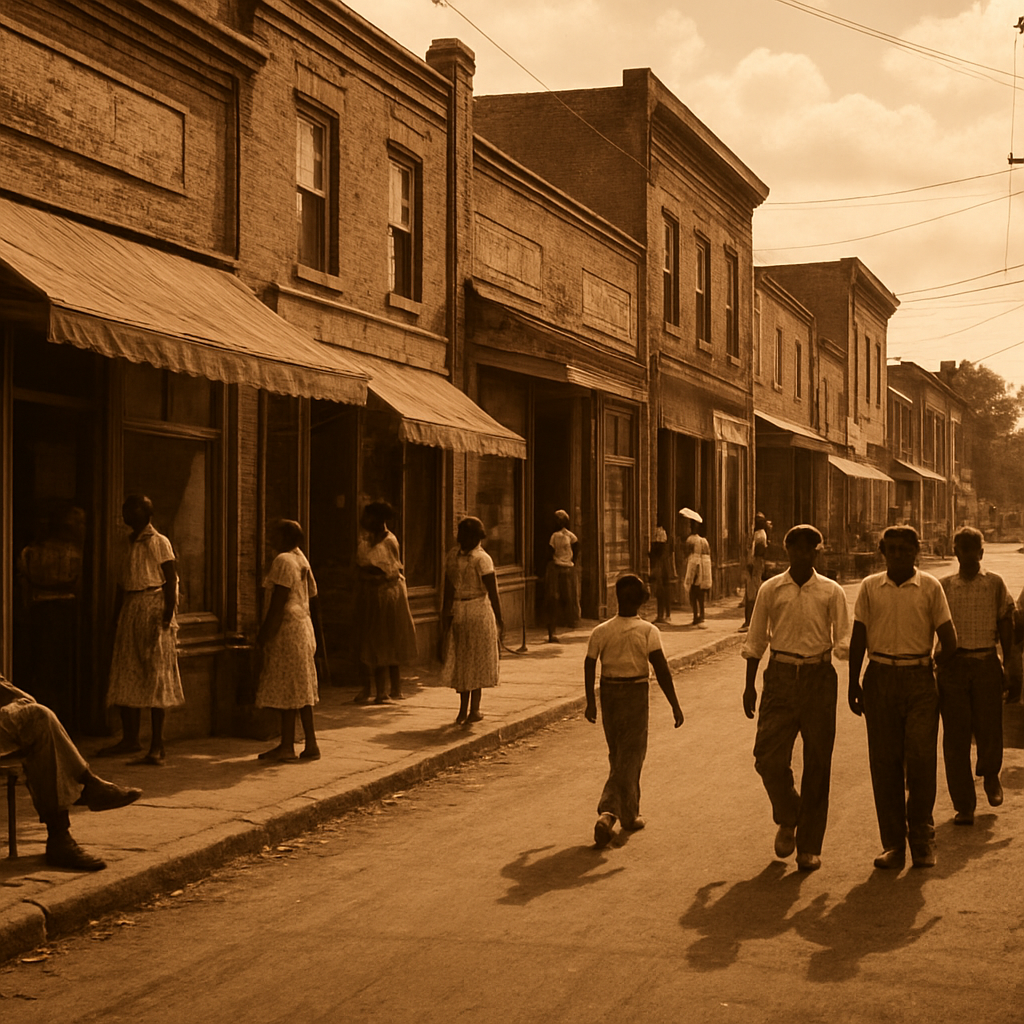
Historic DeVilliers Street in downtown Pensacola — once the heart of a thriving Black business district.
The District That Built Itself
Drive through downtown Pensacola today and you will see restaurants, boutiques, office buildings, and entertainment venues. But in the early decades of the 20th century, that same stretch of land told a different story — one of resilience, entrepreneurship, and community building in the face of segregation.
Welcome to the Belmont-DeVilliers district.
Origins of a Neighborhood
The area spanned approximately 30 blocks, bordered by Garden Street to the north, Tarragona Street to the south, DeVilliers Street to the east, and the Pensacola Bay waterfront to the west. It was not declared a historic district by any government body. It was declared by the community that built it.
Stay connected to Pensacola’s Black community
Be the first to know when new stories drop. Free to subscribe. Unsubscribe anytime.
Beginning in the 1910s and peaking through the 1950s, Belmont-DeVilliers became the heart of Black economic life in Pensacola. It was a place where Black entrepreneurs could own property, operate businesses, and serve their community without the barriers imposed by Jim Crow laws elsewhere.
More Than a Business District
The district was layered. On the ground floor, you had retail — barbershops, restaurants, dry cleaners, and pharmacies. But above those storefronts was something more profound: a vertical community.
Black professionals — doctors, lawyers, accountants, and ministers — maintained offices upstairs. The same building that housed a lunch counter might host a civil rights meeting after hours. The district did not just serve the community; it represented the community achieving self-determination.
The Chitlin Circuit Connection
Belmont-DeVilliers was a recognized stop on the Chitlin Circuit, the network of venues where Black entertainers could safely perform during segregation. Jazz legends, blues musicians, and comedy acts performed at local clubs, bringing revenue and cultural prestige to the district.
Musicians like Duke Ellington, Louis Armstrong, and Cab Calloway passed through Pensacola on their tours, and the Belmont-DeVilliers district was where they found welcome when much of the South offered only rejection.
The rhythm of live music spilling onto the streets on weekend nights was not just entertainment — it was a declaration that joy existed here, too, despite everything.
The Decline and What Remained
Like many historic Black business districts across America, Belmont-DeVilliers began to decline in the 1960s. Integration opened new opportunities but also drew economic activity elsewhere. Urban renewal projects in the mid-20th century displaced some businesses.
But the district never disappeared entirely. And in recent years, there has been a quiet revival. New generations of Black entrepreneurs are reopening businesses in the area. The history is being documented. The stories are being told.
Why It Matters Now
The Belmont-DeVilliers district matters because it proves something. It proves that when given the chance, communities build. They create institutions, economies, and cultures that sustain generations.
The Pensacola Beacon exists in part because places like Belmont-DeVilliers existed first. We are documenting what was built so that what comes next can build on a foundation of truth.
The district may look different today. But the spirit remains. And as long as we remember, it will never be lost.
<p class="further-reading"><strong>Further reading:</strong> <a href="/articles/chitlin-circuit-belmont-devilliers">The Chitlin' Circuit: When Belmont-DeVilliers Was the Heart of Black Music</a> · <a href="/articles/women-who-built-black-pensacola">The Women Who Built Black Pensacola</a> · <a href="/articles/black-owned-businesses-downtown-pensacola">Meet the Black-Owned Businesses Transforming Downtown Pensacola</a></p>
Get stories like this in your inbox every week
The Pensacola Beacon covers Black culture, history, and community on the Gulf Coast.