The Women Who Built Black Pensacola
From beauty salons to boarding houses, Black women entrepreneurs shaped Pensacola's Gulf Coast economy for decades. Their stories deserve to be told.
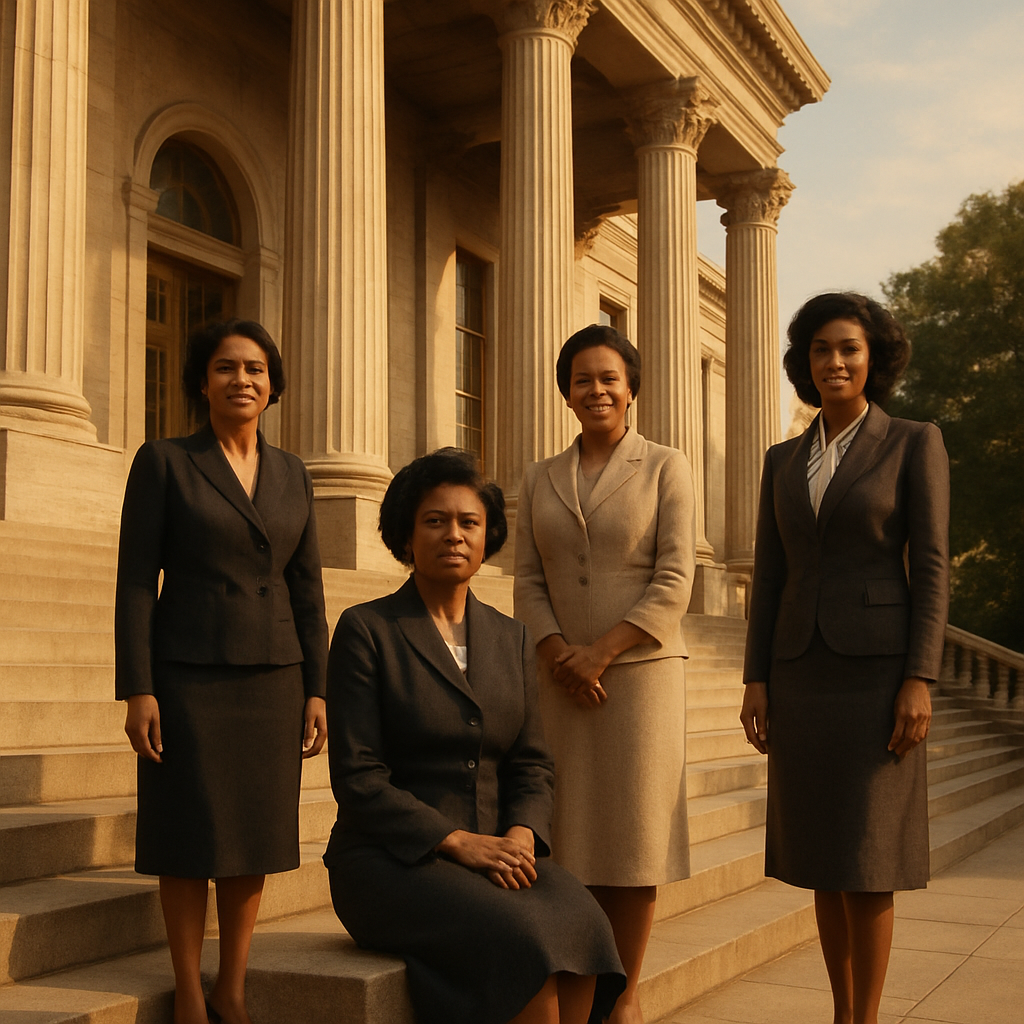
Black women entrepreneurs built the economic backbone of Pensacola's Gulf Coast communities.
<p>When historians talk about Black enterprise on the Gulf Coast, they tend to focus on the men: the club owners, the barbers, the fishermen. But walk through the archives at the University of West Florida or sit down with the elders in Belmont-DeVilliers, and a different picture emerges. One where Black women were the true economic backbone of Pensacola for more than half a century.</p>
<h2>The Beauty Shop Economy</h2>
<p>In the 1930s and 1940s, beauty salons were more than places to get your hair done. For Black women in Pensacola, they were the entry point into business ownership, and they became the financial engines of their neighborhoods.</p>
Stay connected to Pensacola’s Black community
Be the first to know when new stories drop. Free to subscribe. Unsubscribe anytime.
<p><strong>Estelle Mae Richardson</strong> opened her salon on Belmont Street in 1934. Within a decade she employed six stylists and owned the building outright. Her shop wasn't just a business. It was a community institution. Women came to get their hair pressed and left with information about voter registration drives, church fundraisers, and which landlords were renting to Black families.</p>
<p>"The beauty shop was the newsroom before there was a newsroom," says Dr. Valerie Patterson, a historian at the University of West Florida who has spent two decades researching Black women's enterprise on the Gulf Coast. "If you wanted to know what was really happening in the community, you went to Miss Estelle's."</p>
<p>Richardson was far from alone. By the late 1940s, at least a dozen Black women owned and operated beauty salons in the Belmont-DeVilliers area. Many had trained through the Madam C.J. Walker system or at historically Black colleges. They brought professional standards to an industry that white Pensacola didn't even recognize as a real business.</p>
<h2>Boarding Houses and Real Estate</h2>
<p>When Jim Crow laws meant Black travelers couldn't stay at white-owned hotels, Black women in Pensacola stepped in. Boarding houses became a thriving industry, and women dominated it.</p>
<p><strong>Lottie Mae Jenkins</strong> ran one of the most well-known boarding houses on DeVilliers Street from 1938 through the late 1960s. Her three-story house could accommodate up to 15 guests at a time, and she was listed in <em>The Negro Motorist Green Book</em>, the essential travel guide for Black Americans navigating a segregated country.</p>
<p>"Mrs. Jenkins fed you breakfast, gave you clean sheets, and told you where the safe places in town were," recalls James Whitfield, 84, whose family lived next door. "Musicians on the Chitlin' Circuit stayed with her. Pullman porters stayed with her. She ran that house like a five-star hotel."</p>
<p>Jenkins eventually owned three properties on the same block. She rented to families and single mothers at rates that were intentionally below market. "She could have charged more," Whitfield says. "But she said, 'My people need homes more than I need money.'"</p>
<p>Other boarding house operators followed similar patterns. <strong>Fannie Lou Carter</strong> on A Street. <strong>Dorothy James</strong> on Spring Street. <strong>Mabel Washington</strong> near the Savoy Ballroom. These women weren't just innkeepers. They were real estate investors who built generational wealth in an era designed to prevent exactly that.</p>
<h2>Retail and Commerce</h2>
<p>Black women also ran retail businesses up and down the Belmont-DeVilliers commercial strip. <strong>Cora Davis</strong> operated a dress shop that stocked clothing imported from New York and Atlanta. <strong>Annie Pearl Henderson</strong> ran a grocery store that extended credit to families who couldn't make it to payday. <strong>Geneva Scott</strong> owned a florist shop that provided arrangements for every Black wedding and funeral in the county for over twenty years.</p>
<p>These businesses were connected by an informal but powerful network. Women lent each other money, shared supplies, and referred customers. When one shop had a slow week, others helped cover the gap. It was mutual aid before anyone called it that.</p>
<h2>The Professional Class</h2>
<p>By the 1950s, a generation of Black women who had grown up watching their mothers and grandmothers build businesses were entering the professions. <strong>Dr. Yvonne Clark</strong> became one of the first Black women dentists in Escambia County. <strong>Attorney Mildred Washington</strong> opened a law practice that specialized in property disputes, helping Black families hold onto land that developers were trying to buy at below-market prices.</p>
<p>"These women didn't have role models in the traditional sense," Dr. Patterson explains. "They had mothers and aunts who ran businesses out of their living rooms. That was the role model. That was the MBA."</p>
<h2>Urban Renewal and Erasure</h2>
<p>The urban renewal projects of the 1960s and 1970s devastated Black women's business networks in Pensacola just as they did across the American South. Buildings were condemned. Properties were seized through eminent domain. Entire blocks were razed for highway construction and redevelopment projects that rarely benefited the Black community.</p>
<p>Many women lost businesses that had been in their families for decades. The boarding houses closed as the Green Book era ended and integration opened new accommodations. The beauty shops scattered to strip malls across the city, losing the density that had made them a cultural force.</p>
<p>"Urban renewal wasn't just about buildings," says Whitfield. "It was about breaking the network. Those women held the community together, and the city tore out the place where they did it."</p>
<h2>Legacy</h2>
<p>Today, a new generation of Black women entrepreneurs in Pensacola is building again. They run restaurants, tech startups, consulting firms, and creative agencies. Many of them know the names of the women who came before. Some are their granddaughters.</p>
<p>The Pensacola Beacon believes these stories deserve to be told in full. Not as footnotes, not as sidebars to the stories of men, but as the main narrative. Because the women who built Black Pensacola didn't build in the margins. They built at the center. And everything that came after rests on the foundation they laid.</p>
<p class="further-reading"><strong>Further reading:</strong> <a href="/articles/belmont-devilliers-black-business-thrived">Belmont-DeVilliers: Where Black Business Thrived</a> · <a href="/articles/chitlin-circuit-belmont-devilliers">The Chitlin' Circuit: When Belmont-DeVilliers Was the Heart of Black Music</a> · <a href="/articles/black-owned-businesses-downtown-pensacola">Meet the Black-Owned Businesses Transforming Downtown Pensacola</a></p>
Get stories like this in your inbox every week
The Pensacola Beacon covers Black culture, history, and community on the Gulf Coast.